Turning an offline editorial workflow into a streamlined CMS experience
Turning an offline editorial workflow into a streamlined CMS experience
PROJECT BRIEF
PROJECT BRIEF
PROJECT BRIEF
Vantage Research created 2000+ reports a year — but their process lived across emails, and scattered follow-ups. No one knew who owned what, what stage a report was in, or how close it was to publishing.
I along with a UXUI designer, redesigned their entire editorial workflow into a simple, accountable CMS that helps the team write, review, assign, and publish with confidence.
Vantage Research created 2000+ reports a year — but their process lived across emails, and scattered follow-ups. No one knew who owned what, what stage a report was in, or how close it was to publishing.
I along with a UXUI designer, redesigned their entire editorial workflow into a simple, accountable CMS that helps the team write, review, assign, and publish with confidence.
INDUSTRY
INDUSTRY
B2B/ CMS
B2B/ CMS
ROLE
ROLE
UI/UX Designer
UI/UX Designer
TIMELINE
TIMELINE
Oct-Nov 2024
Oct-Nov 2024
SERVICE
SERVICE
Website & CMS
Website & CMS
DIGGING INTO THE PROBLEM
DIGGING INTO THE PROBLEM
DIGGING INTO THE PROBLEM
To uncover the real challenges, we held multiple sessions with the client team. These conversations helped both sides visualize their current workflow, spot inefficiencies, and clarify what an ideal process might look like.
To uncover the real challenges, we held multiple sessions with the client team. These conversations helped both sides visualize their current workflow, spot inefficiencies, and clarify what an ideal process might look like.
To uncover the real challenges, we held multiple sessions with the client team. These conversations helped both sides visualize their current workflow, spot inefficiencies, and clarify what an ideal process might look like.
Mapping the Offline flow
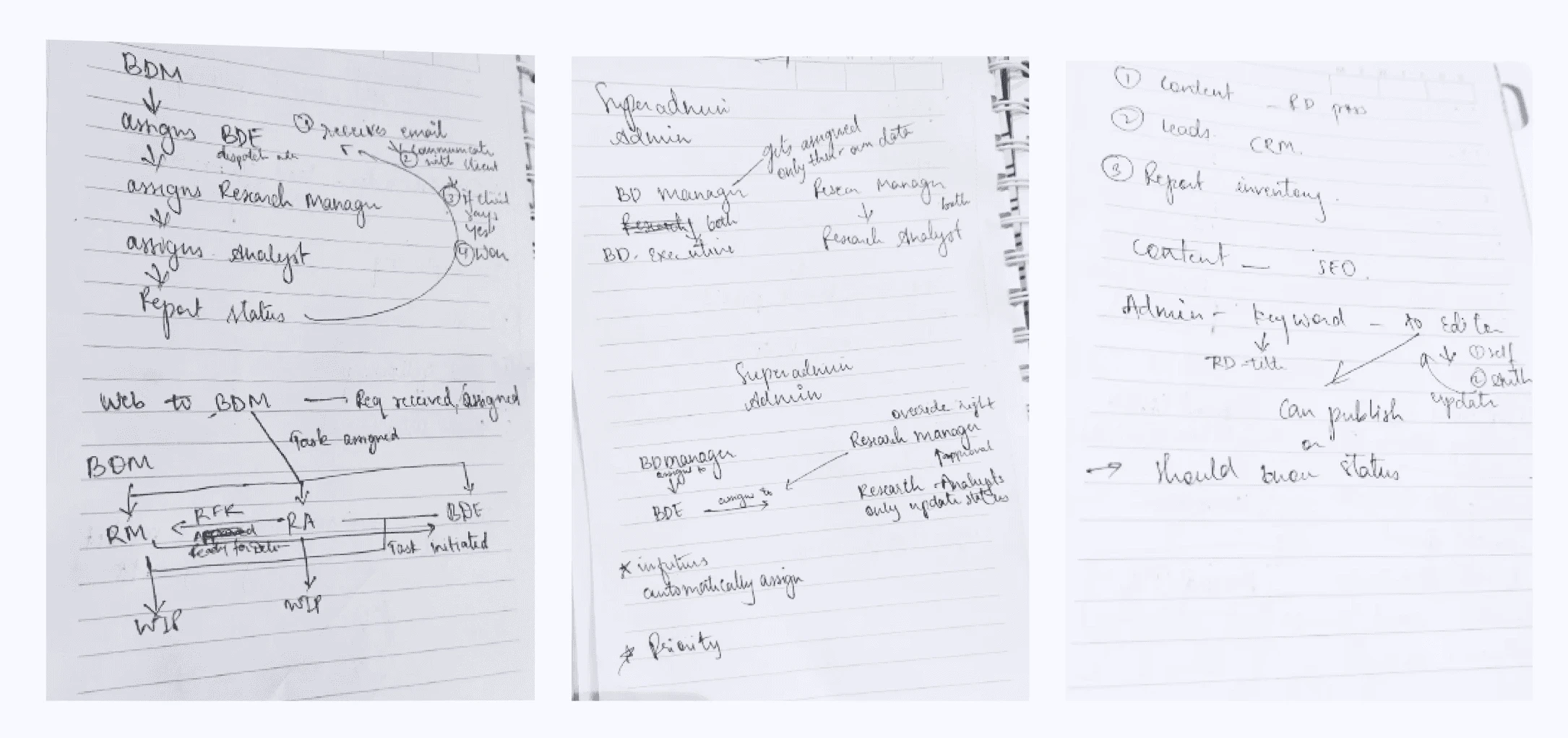
We worked with the client to map their RD publishing flow — a process even they were still defining. This collaboration helped us understand their daily workflow while also revealing gaps they hadn’t noticed before. To understand the friction, we mapped their actual working cycle
We worked with the client to map their RD publishing flow — a process even they were still defining. This collaboration helped us understand their daily workflow while also revealing gaps they hadn’t noticed before. To understand the friction, we mapped their actual working cycle
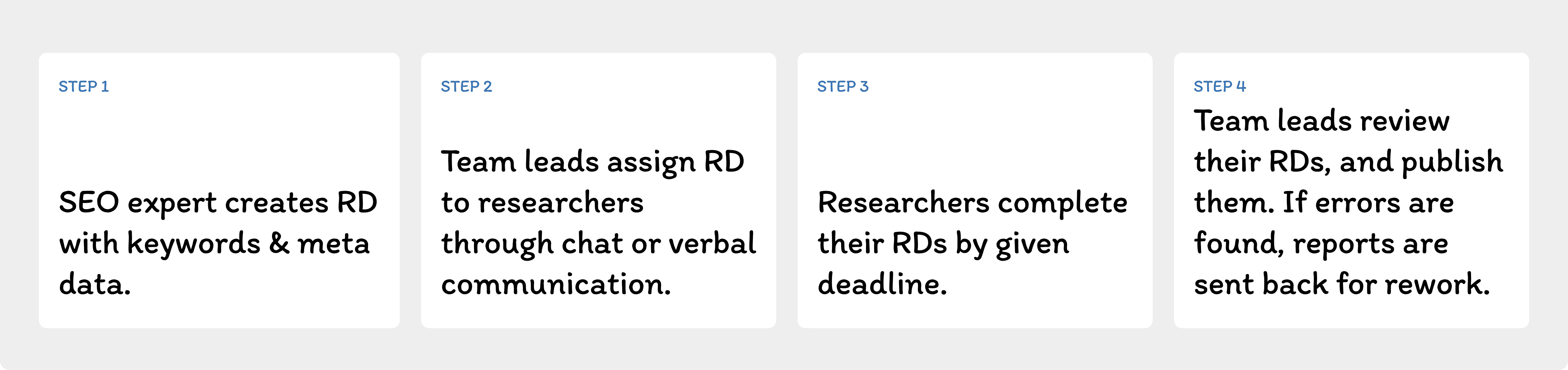
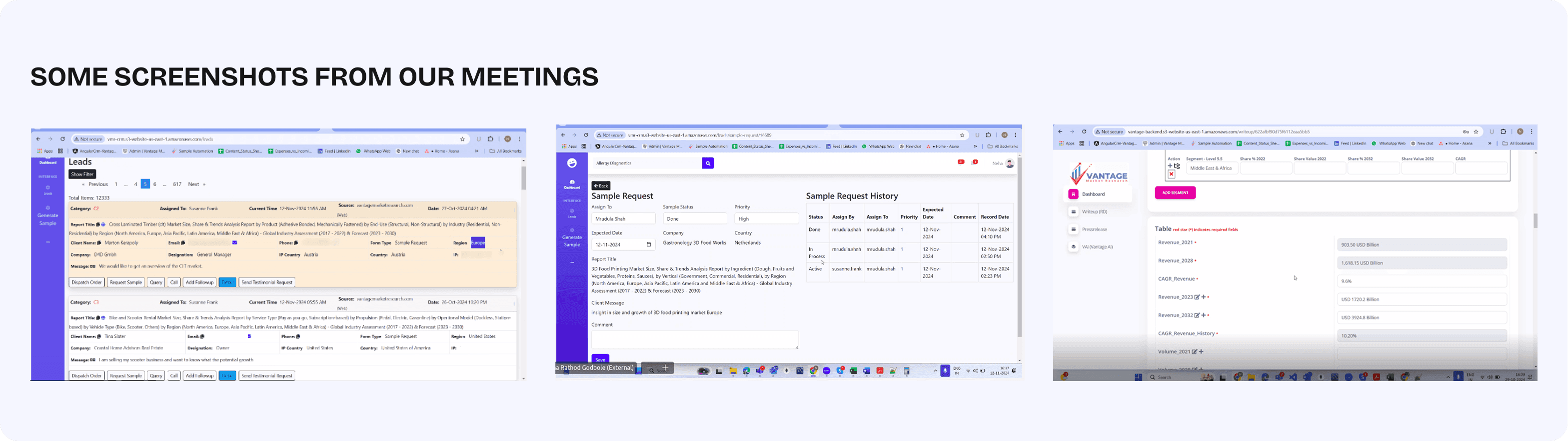
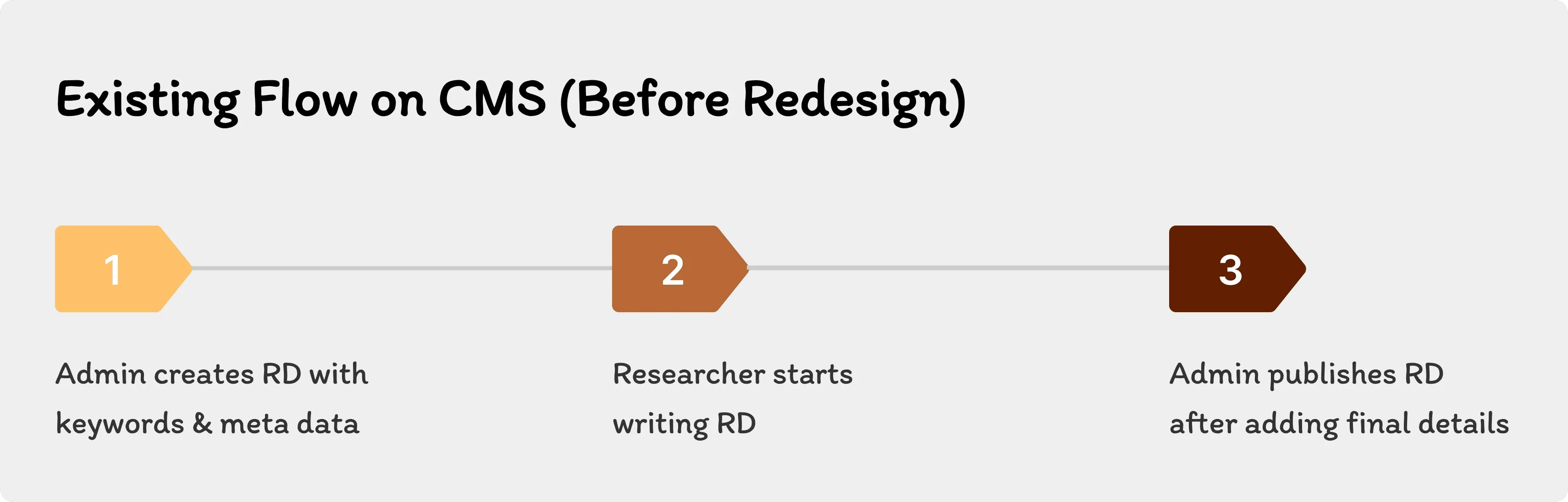
Then we studied their portal to understand their workings. From the portal, we found their old userflow.
Then we studied their portal to understand their workings. From the portal, we found their old userflow.
Then we studied their portal to understand their workings. From the portal, we found their old userflow.
Problem with current system
Problem with current system
The RD creation process at Vantage was scattered — with teams using offline steps, unclear handoffs, and no central system to track progress. This caused delays and inconsistent quality.
The RD creation process at Vantage was scattered — with teams using offline steps, unclear handoffs, and no central system to track progress. This caused delays and inconsistent quality.
The RD creation process at Vantage was scattered — with teams using offline steps, unclear handoffs, and no central system to track progress. This caused delays and inconsistent quality.
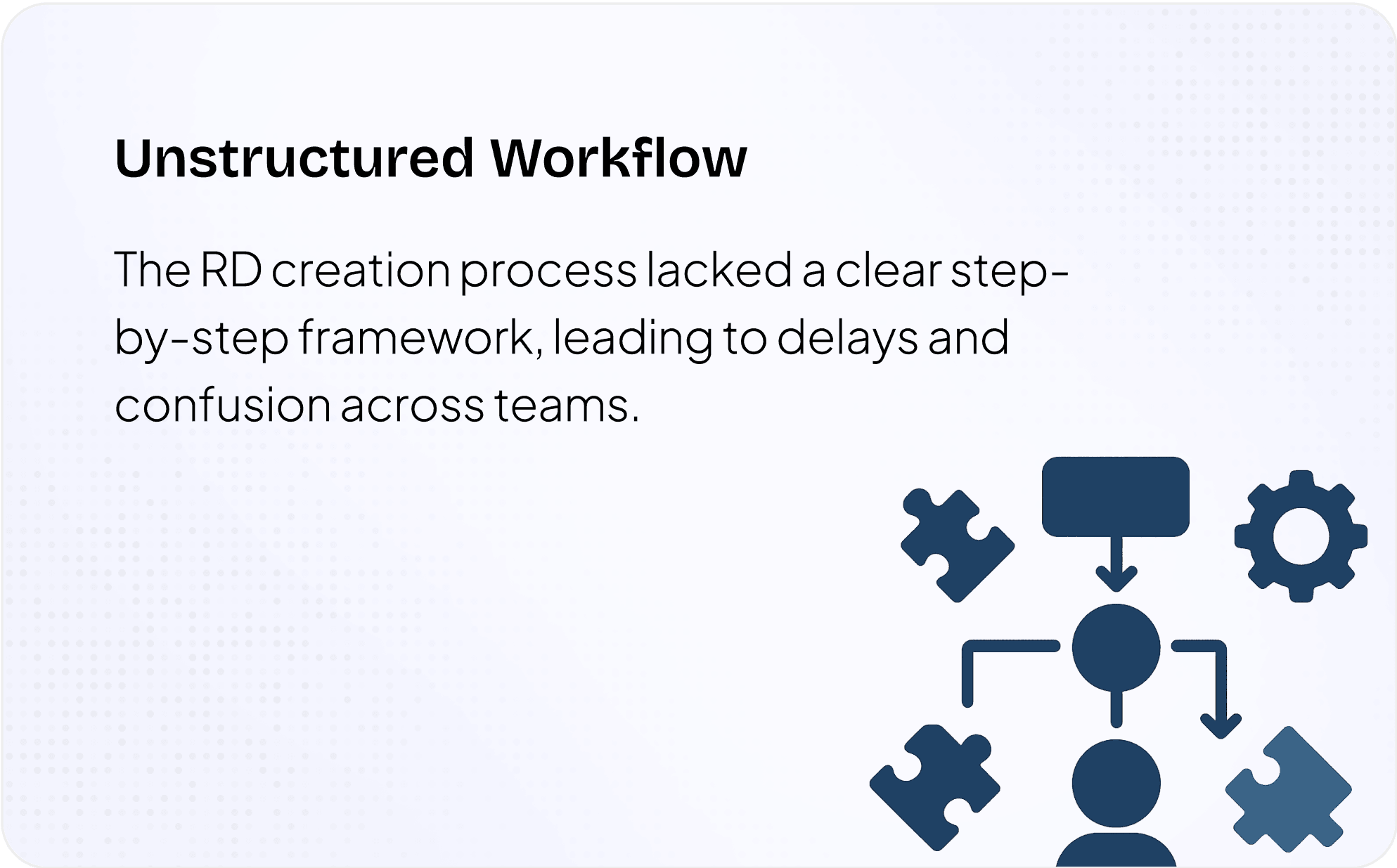
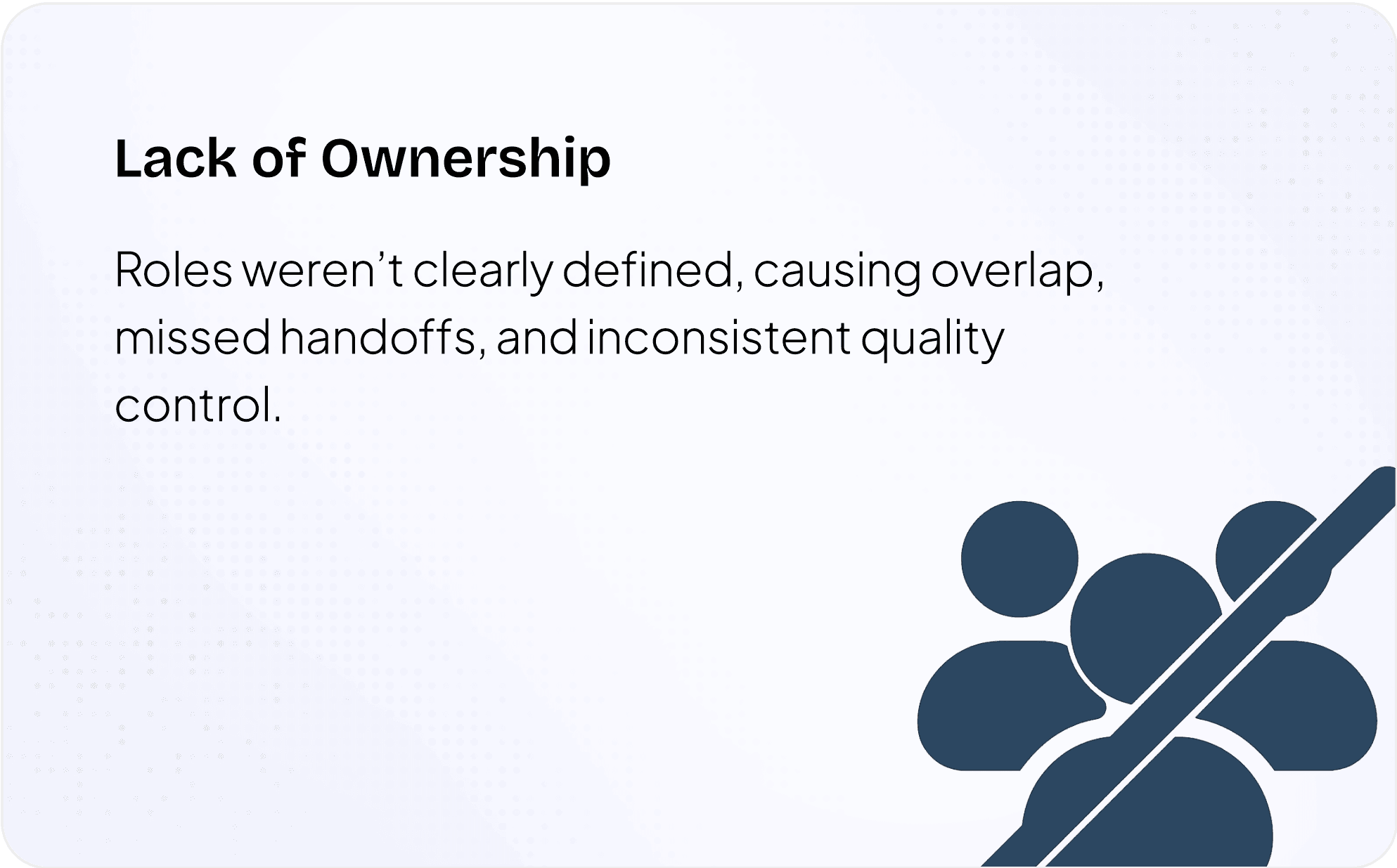
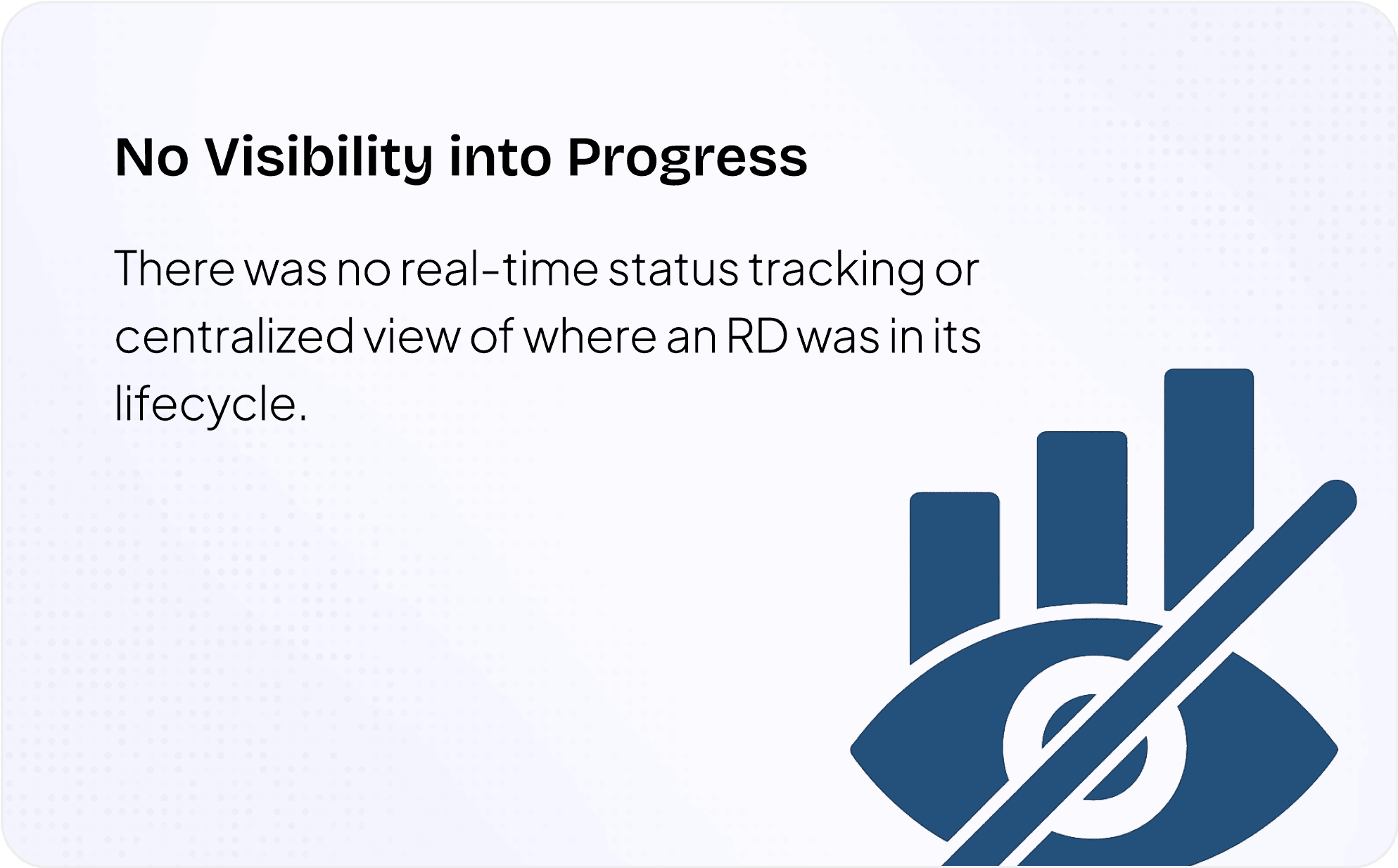
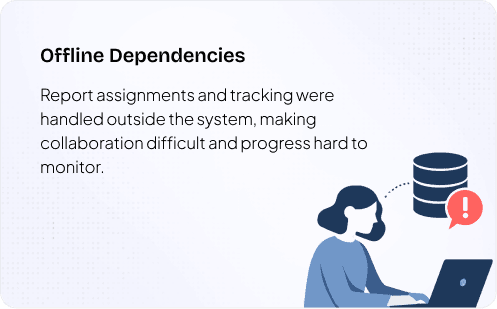
As the volume of reports grew,
this lack of structure became a bottleneck.
As the volume of reports grew,
this lack of structure became a bottleneck.
As the volume of reports grew,
this lack of structure became a bottleneck.
The team needed a system that could mirror their real-world workflow, make ownership clear, and track every step of the process within the platform.
The team needed a system that could mirror their real-world workflow, make ownership clear, and track every step of the process within the platform.
The team needed a system that could mirror their real-world workflow, make ownership clear, and track every step of the process within the platform.
HOW MIGHT WE
HOW MIGHT WE
1
Enable seamless collaboration among the members in the loop by digitizing a fragmented workflow?
2
Ensure that every report’s progress is trackable, assignable, and visible to the right stakeholders?
Benchmarking Other Tools & Rethinking Workflow
Benchmarking Other Tools & Rethinking Workflow
Benchmarking Other Tools & Rethinking Workflow
We reviewed modern workflow and CMS patterns to understand how assignments, ownership, and structured content are handled. This helped us design a process that felt natural for Vantage while staying scalable.
We reviewed modern workflow and CMS patterns to understand how assignments, ownership, and structured content are handled. This helped us design a process that felt natural for Vantage while staying scalable.
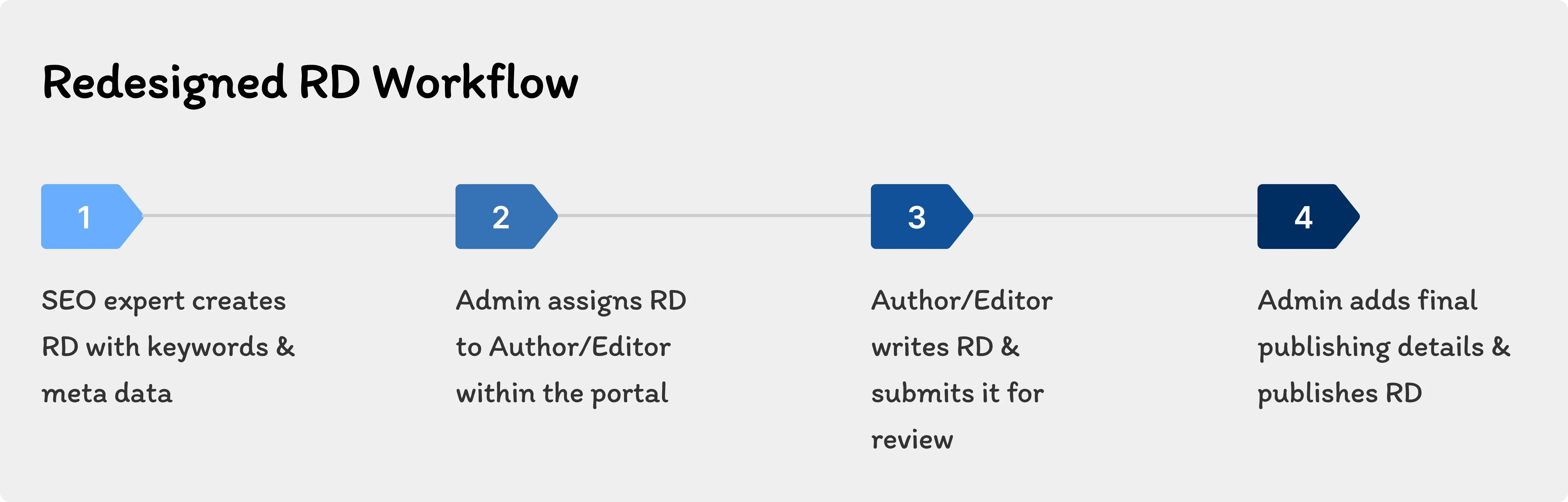
Built through workshops, client feedback, and multiple design iterations.
Built through workshops, client feedback, and multiple design iterations.
Built through workshops, client feedback, and multiple design iterations.
This was more than a redesign — it was a process of aligning technology with real team workflows.
This was more than a redesign — it was a process of aligning technology with real team workflows.
HOW MIGHT WE
1
Enable seamless collaboration among the members in the loop by digitizing a fragmented workflow?
2
Ensure that every report’s progress is trackable, assignable, and visible to the right stakeholders?
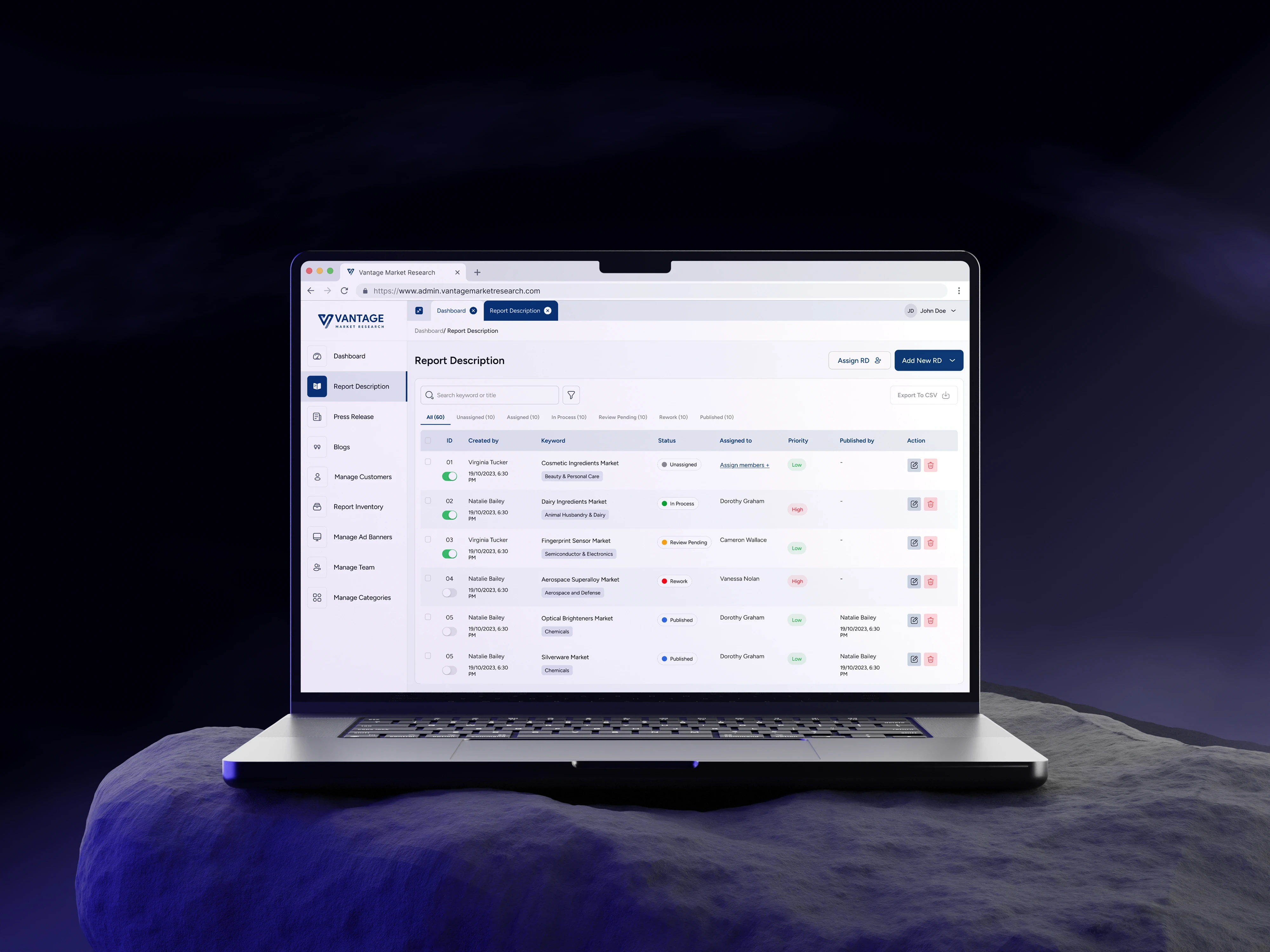
RD Listing screen
RD Listing screen
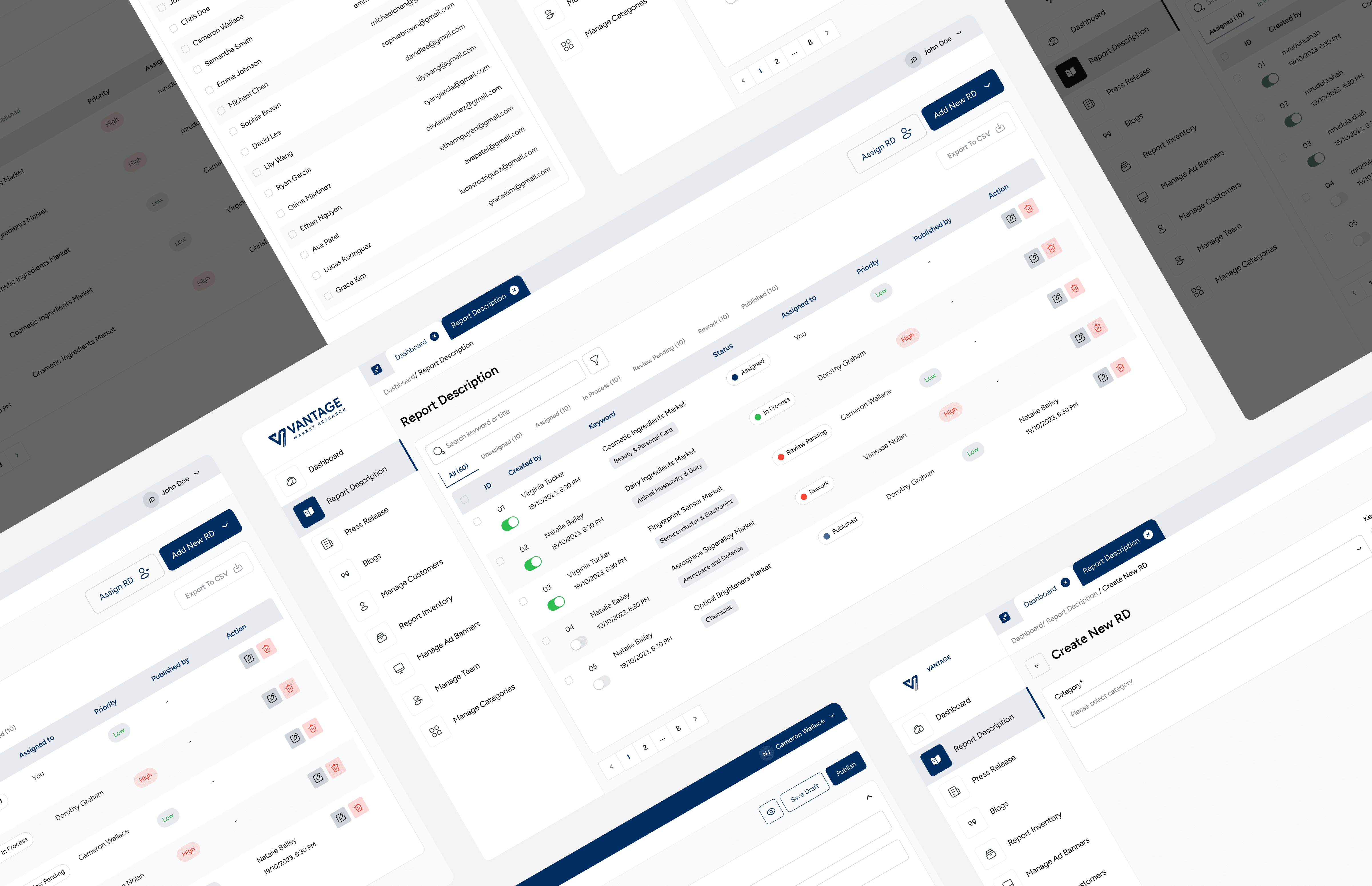
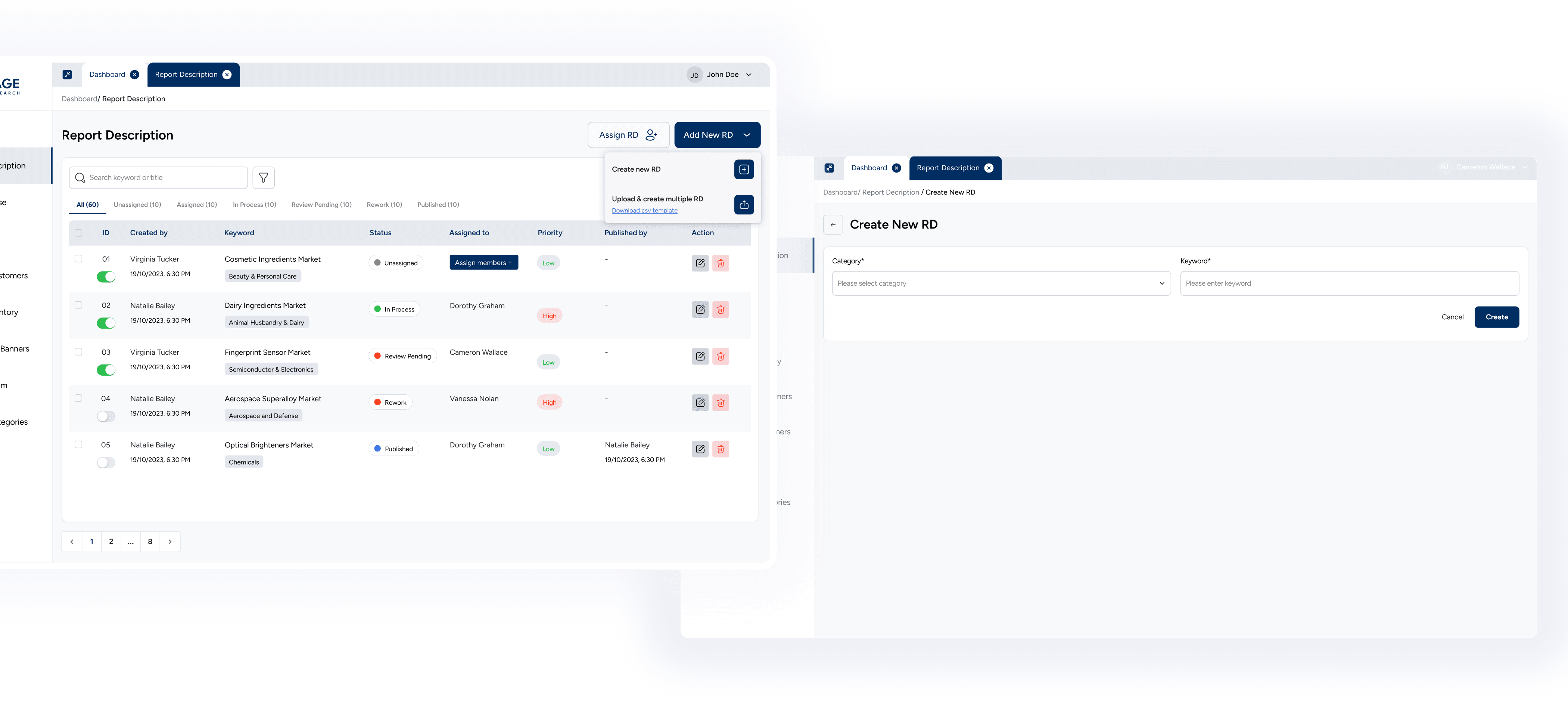
We redesigned the listing screen to make ownership and progress clear at a glance. The new layout shows who’s working on what, and the right-side drawer lets users view or edit RD details without leaving the list—keeping navigation smooth and reviews much faster.
We redesigned the listing screen to make ownership and progress clear at a glance. The new layout shows who’s working on what, and the right-side drawer lets users view or edit RD details without leaving the list—keeping navigation smooth and reviews much faster.
Assigning RD to a Research Analyst
Assigning RD to a Research Analyst
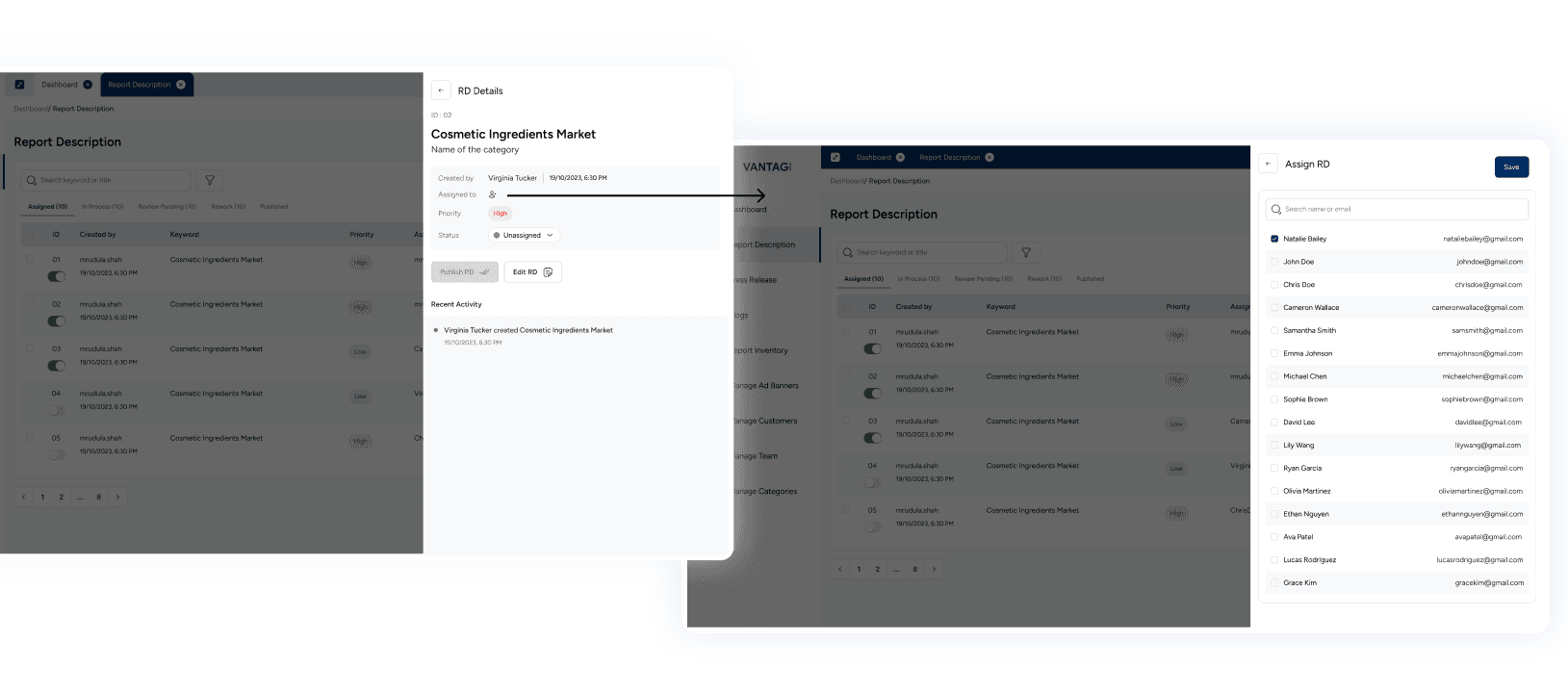
To solve unclear ownership, we added an in-portal assignment flow. Admins can now assign RDs directly from the list or details view, removing offline follow-ups and making responsibility clear for every report.
To solve unclear ownership, we added an in-portal assignment flow. Admins can now assign RDs directly from the list or details view, removing offline follow-ups and making responsibility clear for every report.
RD details & publishing
RD details & publishing
Once an RD is complete, Admins can review final details—like translations, pricing, and metadata—before publishing.
Once an RD is complete, Admins can review final details—like translations, pricing, and metadata—before publishing.
Once an RD is complete, Admins can review final details—like translations, pricing, and metadata—before publishing.
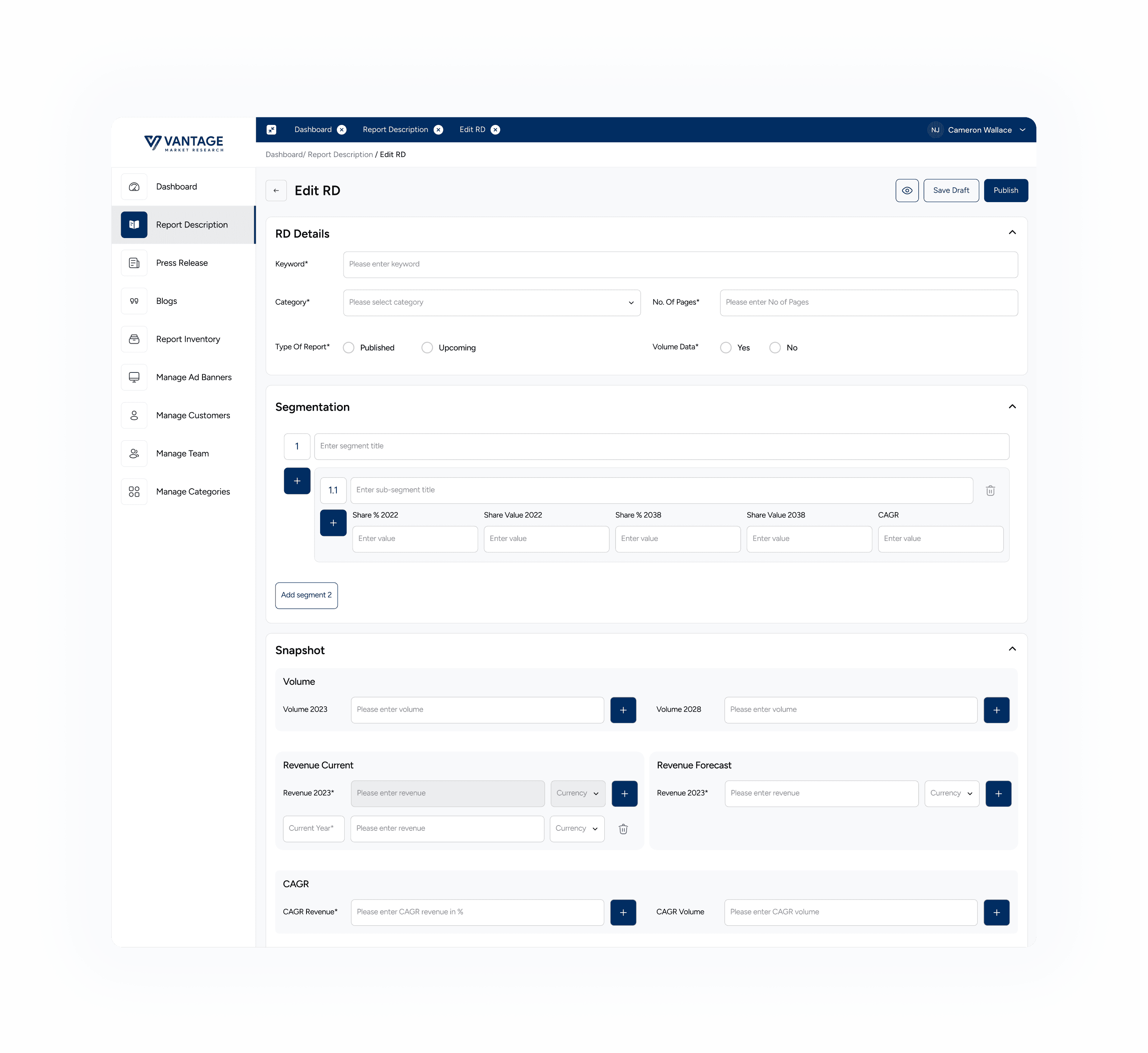
We kept all the original fields but redesigned the form to be clearer and easier to use, with grouped sections and a more intuitive flow.
We kept all the original fields but redesigned the form to be clearer and easier to use, with grouped sections and a more intuitive flow.
We kept all the original fields but redesigned the form to be clearer and easier to use, with grouped sections and a more intuitive flow.
Segmentation, the most complex part, is now flexible and user-friendly, allowing users to add segments and sub-segments without confus
Segmentation, the most complex part, is now flexible and user-friendly, allowing users to add segments and sub-segments without confus
Segmentation, the most complex part, is now flexible and user-friendly, allowing users to add segments and sub-segments without confus
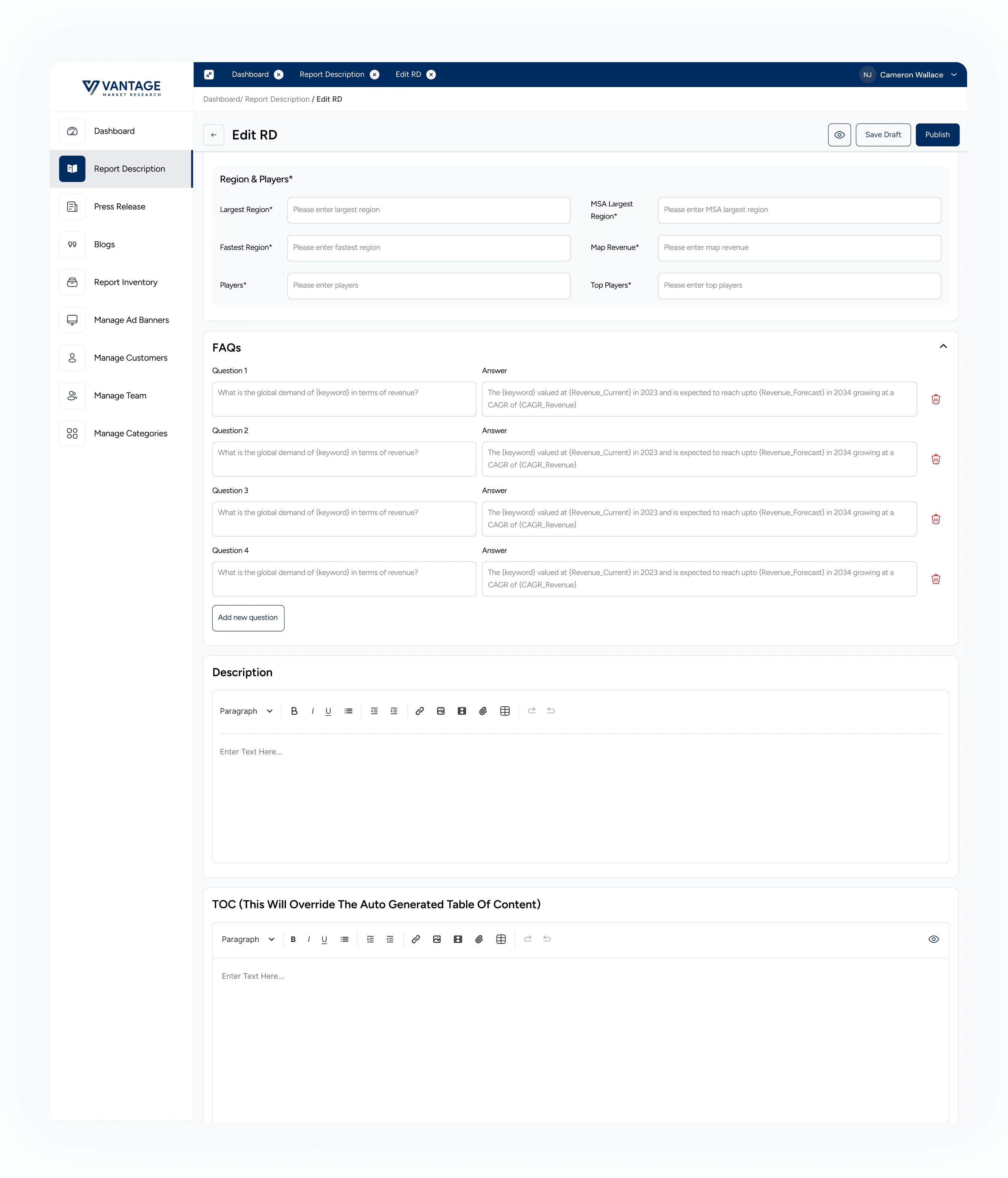
This section holds all the supporting data that appears on the website as tables and charts, so clarity was key. We kept the original fields but reorganized them to feel lighter and easier to work with. FAQs, regions, players, descriptions, and TOC were redesigned to be more structured and user-friendly, with dynamic add/remove options and a clean editor—making heavy data entry feel manageable and intuitive.
This section holds all the supporting data that appears on the website as tables and charts, so clarity was key.
We kept the original fields but reorganized them to feel lighter and easier to work with. FAQs, regions, players, descriptions, and TOC were redesigned to be more structured and user-friendly, with dynamic add/remove options and a clean editor—making heavy data entry feel manageable and intuitive.
In this screen, we kept all the original fields from the client’s existing CMS, but redesigned the form to be much easier to use. The layout is simplified, sections are clearly grouped, and the overall flow feels more intuitive for authors and admins
Segmentation—one of the most complex parts of their reports—was rethought to be more flexible and user-friendly, allowing users to add segments and sub-segments without confusion.
Midway through the project, the client highlighted a key need: researchers often handle multiple RDs at once. Assigning each one individually would be slow and inefficient.
The client also noted that researchers handle multiple RDs at once, making one-by-one assignments too slow.
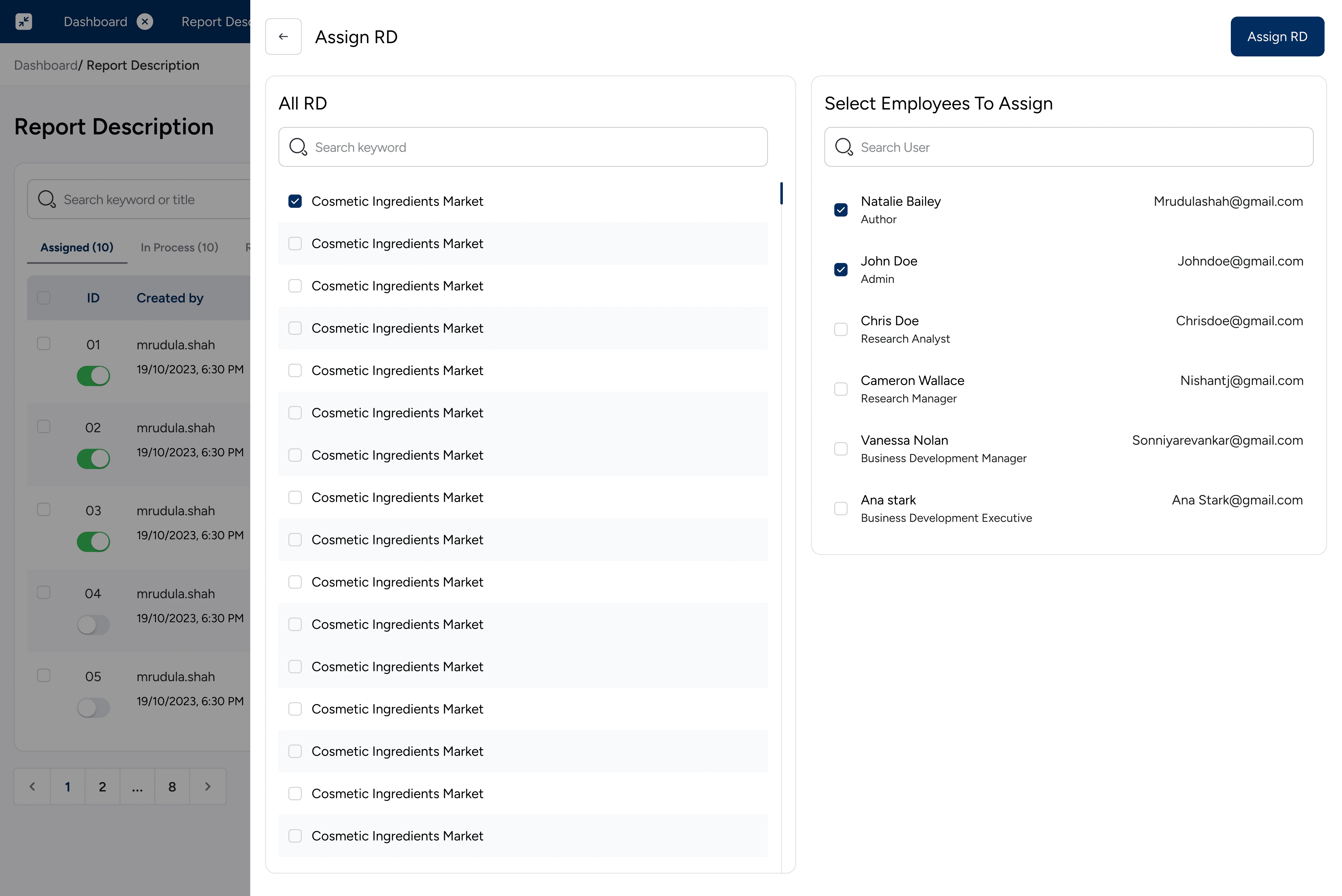
To address this, we designed a user flow that allowed Bulk Assignment — enabling Admins to assign multiple reports to a user in one go, simplifying the process and aligning with their real-world needs.
To address this, we designed a user flow that allowed Bulk Assignment — enabling Admins to assign multiple reports to a user in one go, simplifying the process and aligning with their real-world needs.
In this screen, we kept all the original fields from the client’s existing CMS, but redesigned the form to be much easier to use. The layout is simplified, sections are clearly grouped, and the overall flow feels more intuitive for authors and admins
Segmentation—one of the most complex parts of their reports—was rethought to be more flexible and user-friendly, allowing users to add segments and sub-segments without confusion.
Leveraging AI to Strengthen Design Thinking
Leveraging AI to Strengthen Design Thinking
Throughout this project, I used ChatGPT as a thinking partner to help structure the system, simplify complex workflows, and improve decision-making. It supported me in:
Turning loosely defined workflows into a clear, step-by-step RD process
Spotting UX issues in early designs and referencing patterns from leading tools like Clickup, Linear and Contentful
Exploring better ways to handle filtering, status updates, and export actions with real-world usability in mind
This collaboration helped me move faster, think more critically, and arrive at stronger, more user-centered solutions.
I used ChatGPT as a thinking partner to clarify workflows, refine UX decisions, and explore better patterns for filtering, statuses, and actions. It helped me turn vague processes into clear flows, spot gaps early, and move faster toward more user-centered solutions.
I used ChatGPT as a thinking partner to clarify workflows, refine UX decisions, and explore better patterns for filtering, statuses, and actions. It helped me turn vague processes into clear flows, spot gaps early, and move faster toward more user-centered solutions.
Projected Impact
Projected Impact
Though the new CMS was still in development, the expected improvements were clear:
Clear ownership through role-based assignments, reducing miscommunication
Live status and activity tracking, removing the need for manual follow-ups
A structured, end-to-end flow that mirrors real editorial work and supports scaling
By transforming a fully offline process into a streamlined digital workflow, the redesign set the stage for better efficiency, accountability, and collaboration.
Thanks for reading✨